Welcome! Over the next 14 weekdays, you’ll get one actionable growth move from a different expert. No fluff, just stuff you can actually use.
👉🏻 Don’t want daily emails? Switch to weekly here.
🏃🏻♀️➡️ Catch up on past issues here.
📅 Mark your calendar for the bonus Q & A on Oct. 6th at 11am ET. (Invite to come at the end of the series.)
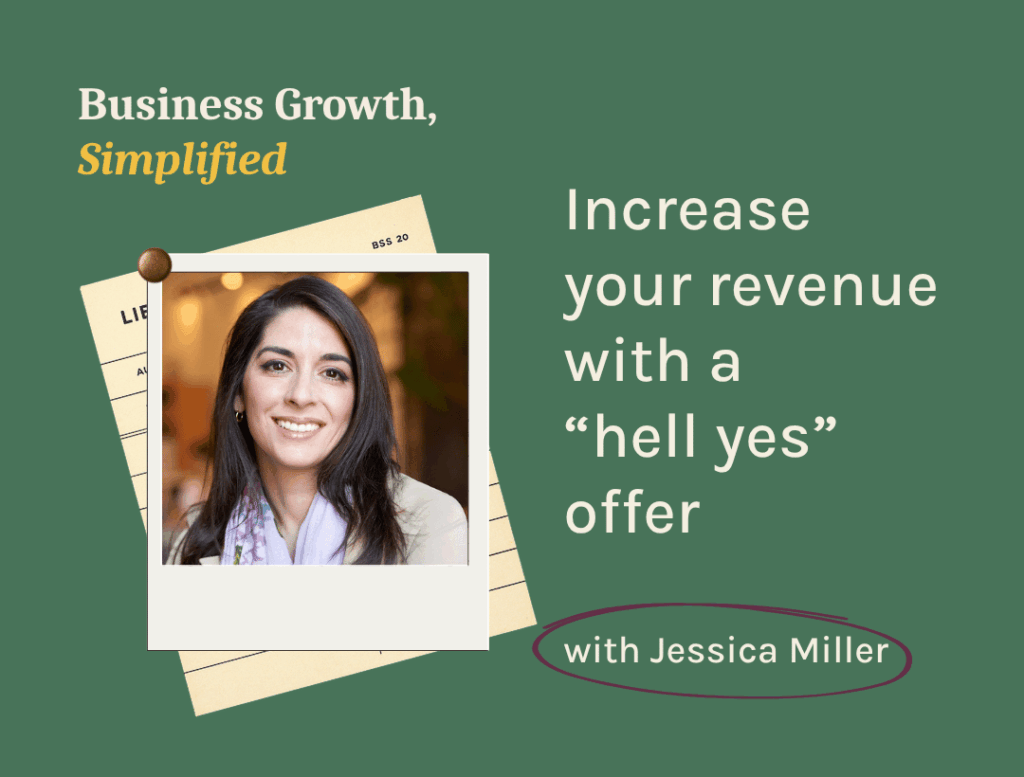
You’re making good money, but you’re working harder for it than you used to and keep wrestling with the same instincts: find more leads, run another campaign, launch something new. Jessica Miller’s approach is much simpler. It’s about finding the fastest revenue already sitting inside the offer you’ve got.
Once you have a proven or signature offer (Humaira’s Day 6 tip), the next move is what Jessica calls finding the “next yes.”
Jessica is a Growth Strategist and Profit Expert who helps business owners stop chasing clients and money and instead uncover the revenue already sitting in the business they’ve built.
How it works
Before trying to attract more clients, identify the most natural thing an existing client could say yes to next, the logical next step for someone who already trusts you.
Jessica’s used this approach with businesses from med spas to coaches,and it works the same whether you’re selling workshops, running a service business, or working in high-ticket coaching.
There are two flavors of the “next yes”. Immediate ones happen right at the point of sale, a tier upgrade or an add-on. Continuous ones build long-term value over time. Neither one requires new marketing. It’s the same audience; they just have more options now.
Why It Works
This works because there’s zero additional marketing spend and zero new campaigns. It’s the same people who already love what you do, given an easy way to get more of it. Small shifts in price and packaging compound in a way that’s easy to underestimate, a jump from $35 to $65 doesn’t sound dramatic until it’s multiplied across every single sale.
Results
Jessica’s client Tyra runs a candle shop in Leesburg, Virginia, and had one option for her $35 workshop. Jessica helped her split it into three tiers ($35, $45, $50) and reframed the workshop as an experience instead of a transaction. She also added a $15 body spray add-on that complemented the candle to take the same experience a step further.
Tyra’s average order value went from $35 to $65 after adding tiered pricing and the $15 add-on. Candle bar revenue alone increased at least 51% compared to if every customer had stayed on the $35 option, and her overall gross sales grew 79.8% year-over-year from January to June, without adding a single new marketing campaign.
How you can do it
What you can knock out on your lunch hour
- Look at what’s already selling best. Check your sales from the last 6-12 months and pick the offer that consistently generates the most revenue, or the one you most want to sell more of.
- Write down the core result, the primary outcome the customer is buying. That result should stay the same across every tier. You’re changing how they receive it, not inventing a different offer.
- Ask yourself (or better yet, ask a few clients) the “hell yes” question: if you could wave a magic wand and add one thing to this experience that would make it an absolute hell yes for you, what would it be? Think specifically about what would give a client more access to you: personalization, speed, convenience, support, accountability, or exclusivity. That’s often where the easiest premium tier comes from.
When you have more time, here’s where it goes next
2. Map the actual client journey. What problem is this offer solving, and what’s the next problem right behind it? You’re looking for something that enhances the result, not something bolted on that feels disconnected.
3. Build tiers if you don’t have them. Three tends to work best, price the middle one 50% above your lowest, and nestle it between a lower and a premium option. Most people won’t pick the top tier or the bottom one, they’ll land in the middle, and that alone can lift revenue significantly without changing anything else about the offer.
4. Add one complementary add-on, something that deepens the experience they’re already having rather than something unrelated tacked on for extra dollars.
Here’s what this could look like for a service-based business: say you run a $199 webinar. Instead of one flat price, offer a $297 VIP version that includes a private follow-up call with you. You don’t need most people to upgrade. Even a modest split between the two tiers, layered with the psychology of anchoring against a premium option, can push your overall revenue up significantly, sometimes even triple it, without a single new lead in the door.
This works at higher price points too. Say you’re selling a 6-month group coaching program for $5,000. Instead of creating an entirely new offer, you add a VIP version for $7,500 that includes four private 1:1 coaching calls over the six months. That’s a natural “next yes” for the client who wants more access, and it adds $2,500 to that sale. Four clients taking the VIP option in one enrollment period is an extra $10,000, from the same offer, same audience, same launch.
Look one step below and one step beyond. Ask what could help someone get started with you, and what they’re likely to need after they get this result. That may uncover a lower-entry offer, an add-on, a continuation offer, a membership, or another obvious next purchase.
5. Think past the immediate sale. Is there a version of this that keeps someone coming back, a membership, a recurring option, something that raises their long-term value instead of just the one transaction?
One note: don’t try to fill every box. The goal isn’t to build a giant offer suite. It’s to find one additional logical yes that makes the offer more valuable to the customer and the relationship more valuable to the business.
Tools
- no special tools needed
If you ran your course idea through Catrina’s audit last week and it passed, this is exactly where it finds its own “next yes,” a VIP tier, an added call, something that turns one offer into two without building anything new from scratch.
If just thinking about asking for more money already has your stomach in knots, the next tip from Sara will help with that.
See you tomorrow,
Stacy
P.S. Jessica Miller is a Growth Strategist and Profit Expert who helps business owners find the revenue already sitting in the offer they’ve got, instead of chasing more leads. She’s spoken at The StoryBrand Made Simple Summit and appeared on The Nathan Barry Show and Business Made Simple. Find her at jessicamillercoaching.com, or on Instagram and LinkedIn, and subscribe to her newsletter.