Wish you could pick the brains of 14 industry experts to grow your solo or small B2B business? Join the 291 other people getting one strategic tip each weekday through October 1st. Plus there’s a bonus, live Q & A with the contributors at the end! Read each issue of Business Growth, Simplified on your coffee break. Try the first step on your lunch hour.
Imagine you’re back on the market for a romantic partner.
You’ve asked around. Every friend swears they know someone who would be perfect for you. You’ve gone to the local meetups, the mixers, the “just show up and see who’s there” events. And it’s looking bleak.
Eventually you cave and download the app.
You know what you’re looking for, even if you can’t fully explain it, and have a feeling you’ll recognize it the second you see it.
The matches start rolling in and you cautiously, but hopefully, open the app.
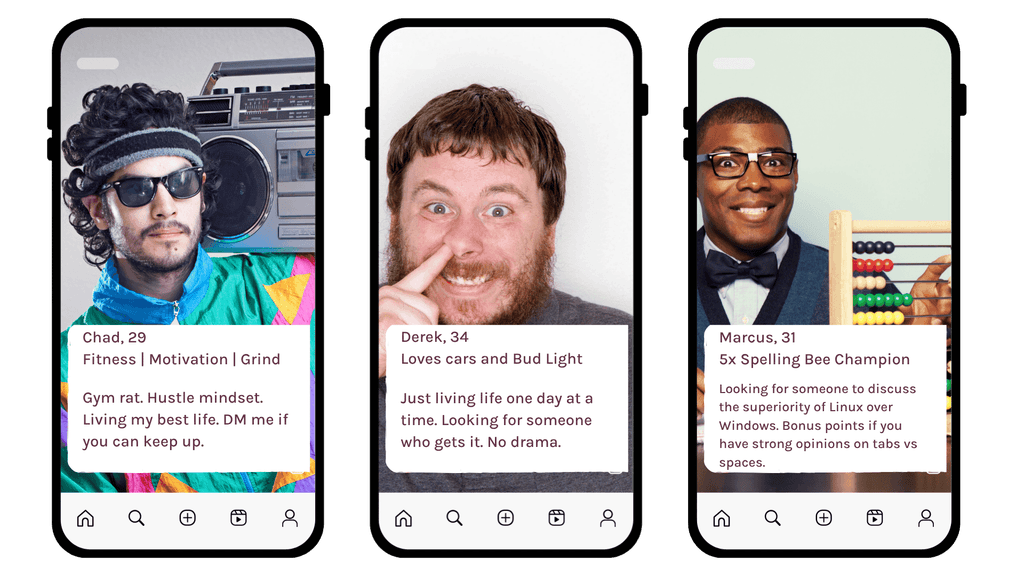
Swipe left. Swipe left. Swipe left.
It takes you seconds, maybe less, to know most of these people aren’t right for you. You feel a little bad about it, so you slow down. You actually read a few of the profiles this time, giving them a real chance. Most of what you read just confirms what you already felt in that first half-second.
You probably don’t want to hear this, but somewhere in that pile of swipes was probably someone who checked every box you were actually looking for.
✓ loves to read
✓ cooks
✓ isn’t voting against basic human decency this November
But the photo was grainy, the lighting was bad, and the whole profile gave off a vibe that made you swipe past before you ever read a word of it. You didn’t just pass on a bad match, you might have passed on a great one because it didn’t look the part in the first half-second you gave it.
No shade. You’re not necessarily shallow or vain. You’re just being human. We form first impressions before we’ve had a single conscious thought about it.
You have 7 seconds. An elevator pitch takes 30.
Like it or not, this is exactly what your potential clients are doing when they land on your website, find you on social media, or meet you at a networking event.
They’re deciding, almost instantly, if you’re credible. And I said “almost” because it really does happen in about the same handful of seconds it takes to swipe left.
They’re also deciding whether you seem like the right match for them. The rest of what happens after that first impression comes down to whether there’s a match between the value and expertise you provide and the exact people you’re able to help.
You’re not oblivious to this happening, so you try to fix it with moves like revising your elevator pitch or tweaking your website. But all of that is upstream of what this actually traces back to: your positioning.
Why being credible isn’t the same as being chooseworthy
This isn’t just about winning a swipe. It’s about whether you’re the one who gets recognized as a leader in your industry, or the one who blends into the crowd of everyone else doing something similar.
The people walking onto bigger stages, turning strangers into clients, sitting across from investors, getting the grant, guesting on the podcasts you’d actually want to be on? They’re not there because they’re the most qualified. Plenty of equally qualified people are still swiping past unnoticed. They’re there because the moment someone looked, the point of view was unmistakable. They’re not more credible, they’re just clearer about exactly why a client would pick them over every other alternative.
This is the same (completely fictitious) company with three completely different first impressions. Bad, better, and best-ish.
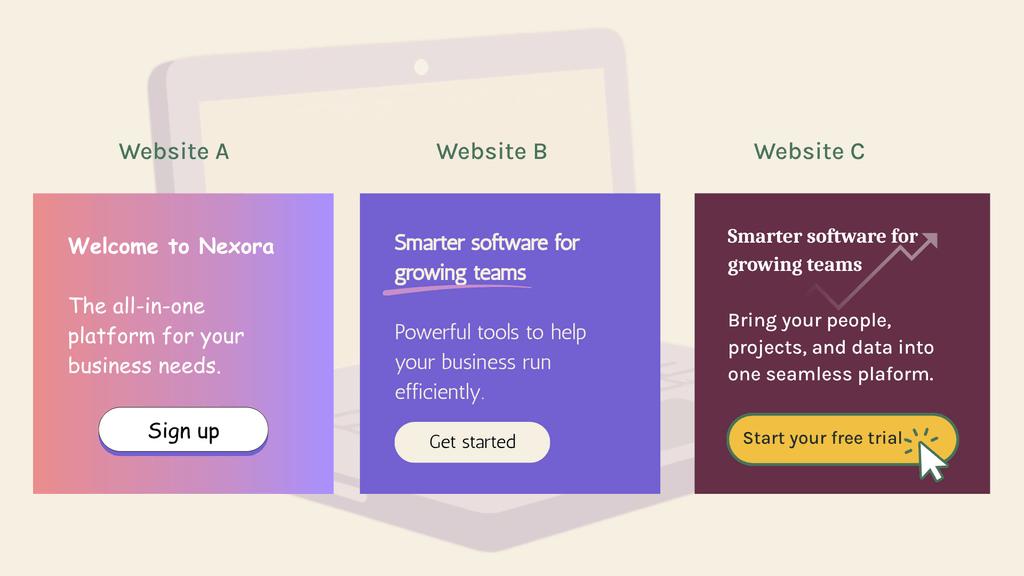
The one on the left? You already know how that swipe goes. The one on the right looks the most legitimate and professional, like a business you could actually trust with your money.
Except…it has the same problem as a vague-but-attractive profile on the dating app. It looks the part. What it doesn’t do is give you anything to pinpoint whether they’re actually right for you. For that, you need signals that say potential soulmate, not attractive stranger.
Your business works the same way. A professional, credible-looking company only earns a deeper look if it sends those same kinds of signals. Watch what changes when it does.
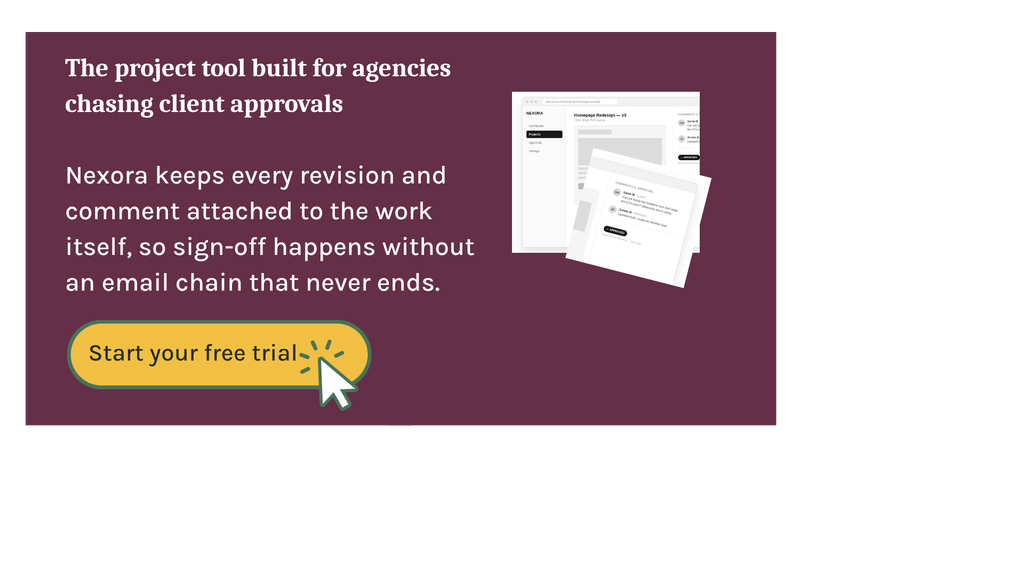
If someone was deciding right now whether you’re worth the stage, the introduction, the yes, would they walk away able to say why you? Being trustworthy gets you considered. Being able to say exactly why you is what makes you chooseworthy.
You might already know which one you are. Most of my clients were exactly here before we worked together: trusted enough to get in the room, but not quite specific enough to be the reason someone picked them once they were standing in it. If you’ve ever felt invisible next to someone with a weaker offer, or wondered why they picked someone who wasn’t even as good as you, that’s exactly what vague costs you.
3 questions to find out if your positioning is working
Believe it or not, recognizing you’re here is actually good news. It’s a sign of growth.
When you first started marketing your business, you were largely working off assumptions. You made guesses, even if educated, at what the market wanted, what your clients wanted, and the kind of outcomes they’d consistently get. You were figuring out how this whole business thing worked, and how to get clients in the door at all.
But you’re not in that stage anymore. You’ve got a proven offer and know who you best serve. Now it’s about what’s next. Which means you can’t rely on guesswork for this foundational piece any longer. It also means you’re exactly right on time for this work.
In order to be the go-to, obvious choice, your positioning needs to be grounded in three things: your brand identity (who you are and what you stand for), your audience (who you’re actually for), and your market (the landscape you’re competing in).
Here are a few questions to help you think through where you are:
- Do you know what you stand for, what you’re for, and what you’re against? Do potential clients?
- If someone landed on your site right now, would they walk away able to say exactly who you’re for and why you, or just that you seemed professional enough?
- If you covered up your logo and looked at your site next to your closest competitor’s, could someone still tell which one was you?
2 ways to test your positioning before you waste money fixing the wrong thing
First: Pull up two competitors’ websites next to yours. Cover up the names. If you can’t tell which site belongs to which business just from the words on the page, that tells you something about how distinctly your positioning is coming through.
Second: Instead of thinking about how you describe what you do, think about how your best clients describe the specific problem you solved for them, in their own words? That language is a key piece of the positioning puzzle and a good place to start. If you want the exact framework for how to do this, I actually covered it in Day 2 of my Business Growth, Simplified email series (It went out Tuesday. If you’re not subscribed and want to read it, just hit reply and I’ll send you the link.)
How to know when you’re ready for positioning work
If you’re curious what this could look like for your business, or wondering whether now’s the right time, here are the patterns I see most often, the signs someone’s actually ready for this work:
- Gearing up to launch something new, considering a rebrand, or ramping up a campaign landing in Q1
- Wanting the kind of visibility that comes with PR, bigger stages, or the podcasts you’d actually want to guest on
- Realizing your growth still depends on referrals from whoever happens to think of you next, instead of anything you can actually predict or repeat (the Proximity Trap™ in action)
If any of this sounds like you, let’s talk. Hit reply, or grab a free discovery call on my calendar. I have space for 1 client in November.
If you’re stuck on one specific piece and just want to rent my brain for an hour, you can schedule a Clarity Call here.
Until next time,
Stacy