Welcome! Over the next 14 weekdays, you’ll get one actionable growth move from a different expert. No fluff, just stuff you can actually use.
👉🏻 Don’t want daily emails? Switch to weekly here.
🏃🏻♀️➡️ Catch up on past issues here.
📅 Mark your calendar for the bonus Q & A on Oct. 6th at 11am ET. (Invite to come at the end of the series.)
You post a case study you’ve spent hours reworking, one you’re genuinely proud of. Twenty minutes later, you check and see a handful of likes from people who already knew you. Then you scroll past a competitor with half your experience posting about a screw up she made, and watch it take off in real time.
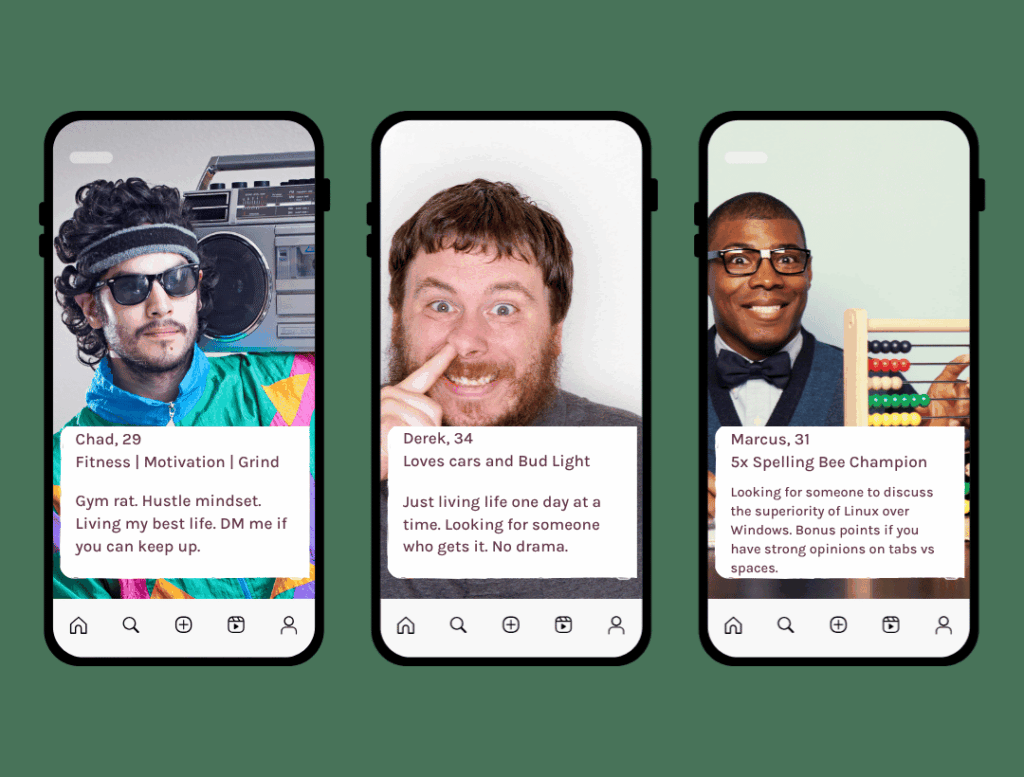
Renee Frojo has watched this play out with hundreds of service providers. Most people default to one of two modes: leading with pure expertise (how-tos, frameworks, credentials), which is now easy for anyone to fake with AI, or leading with personality and story but never connecting it back to what they actually do, which builds warmth without credibility. The sweet spot for actually converting an audience, not just entertaining one, sits in the middle.
How it works
Two things have to be true before you can find your stories.
First, you need your premise: the one thing you believe or stand for that’s different from everyone else doing what you do, and the “because” behind it, the reason you help who you help.
Second, you need real clarity on your ideal client’s hopes, desires, problems, and pain points, not a generic persona. (Revisit Stacy’s day 2 tip for these.)
Once those two things are in place, you scan your own past or recent life for a moment that connects to them. You’re looking for a small shift: something today or yesterday that changed your perspective, made you feel shame, pride, hope, or any other feeling beneath the paint point that mirrors what your clients are going through.
That moment, run through your premise, is your story. If you find yourself forcing a lesson onto an experience that doesn’t naturally carry it (the “I went to the beach and here’s what it taught me about B2B sales” problem), it’s the wrong story for that lesson.
Why it works
Anyone can hand out advice. What’s harder to argue with is a lived experience: people can disagree with your opinion, but they can’t disagree with what actually happened to you. That’s what makes personal stories outperform pure thought leadership. They prove you’re a real person with values that match your audience’s, which is what earns you the benefit of the doubt on the competence part.
Results
- One of Renee’s early clients, a patient advocate with a flat, credentials-only online presence, hired her and later said the reason was simple: she felt like she already knew Renee well enough to get a glass of wine with her. The storytelling did the trust-building before a single sales conversation happened.
- Renee’s client Lauren, a freelance science writer competing with hundreds of others doing the same work, published a story she almost didn’t post: an embarrassing account of accidentally screen-sharing a personal chat with her husband during a prospective client call. It became her most-engaged post ever and led to three client calls immediately after, from people who resonated with how she handled it, while it filtered out the people who didn’t.
- A former job-seeker in Renee’s cohort was hired directly off content she posted after the program, and paid Renee back the sponsorship fee she’d been given because she couldn’t afford the program at the time.
- Renee’s own storytelling drew six unsolicited job interview requests from companies over one summer, without applying to any of them. The point isn’t the job offers; it’s the shift from chasing opportunities to attracting them.
If part of you is already flinching at the idea of posting something this exposed, Renee says that’s usually the tell. In her experience, the story you’re most reluctant to tell is usually the one worth telling.
How you can do it
What you can knock out on your lunch hour:
- Write down your premise: the one thing you believe that’s different about how you approach the problem you’re solving, and the big WHY behind how and who you help.
- Write down your ideal client’s core hope and core pain point, specifically.
- Look back at today and yesterday (go back a third day if you’re stuck) and find one moment where you felt something close to that pain or hope.
- If the connection feels like a stretch, it’s not the story. Move to a different moment instead of forcing it.
When you have more time, here’s where it goes next:
Once you’ve found the moment, shape it with one of two simple structures:
- Belief shift: I believed/did/approached this one way, but then something happened, so now I believe/do/approach it differently.
- Person, place, time: Someone (you or a client) wants something, something gets in the way, something happens that changes the outcome, and there’s a lesson in what they gained or lost.
→ Here’s an example from Renee. And here are 10 more great examples rounded up from LinkedIn.
Before you begin:
Get clear on your premise. The more you run experiences through your premise, the easier this gets. Renee says once the filter is in place, you start noticing shame, pride, gratitude, growth and every other charged moment in your own daily life as usable material, instead of having to dig for it.
Most importantly, develop a practice of noticing and jotting down what you notice. In order to have stories you tell, you have to make collecting these moments a daily practice. You can either do it at the end of the day or the beginning. Whatever works best for you is what’s sustainable.
Tools
- Use what already works for you. If you live in your Apple notes, then that’s the place. If you love spreadsheets, do it there. If you have a journal, put it in there. Don’t try to start a new habit or you’ll stop doing it. If you’re stuck on what to write down, use these prompts: “I heard…, I saw…, I read…, I learned…, I felt….”
See you tomorrow,
Stacy
P.S. Renee Frojo is a journalist-turned-brand builder who helps thought leaders and service providers build a platform around their personal narratives. Find her on LinkedIn, or subscribe to her newsletter, A Good Reputation. Or join Renee’s community, New Narratives, to practice telling your story strategically.