👋🏻 Welcome to issue 95! Did someone send you? Join my other smart subscribers here.
Why we manage messaging problems instead of fixing them
My husband is an acupuncturist.
For years, I let him work on my back. But, and this will come as a shock to no one one who knows me, it had to be on my terms. I had no interest in a real diagnostic process or full treatment plan. Just enough to take the edge off.
He kept telling me the same thing: we’re never actually going to fix this until you let me do this properly. Okay, what he really said was “Put your big girl pants on.”
I wasn’t ready for that.
So I managed it with ice, exercises, and learning which movements to avoid. Same with my knee, a leftover from years of competitive tennis that I’d been bracing and babying for so long it just felt normal.
Then we took our son to Disney when he was nine. After three days of LEGOLAND, EPCOT, and Animal Kingdom, with two more parks still ahead, I woke up on our one day off and couldn’t get out of bed.

He unpacked his needles. (Yes, he travels with them.) One treatment and two hours of what I can only describe as agony-adjacent massage later, I could walk.
But lying there that morning, I finally heard what he’d been telling me for years. A lot of it was stemming from my hips. The knee wasn’t really a knee problem. The back wasn’t only a back problem, but needed its own work too because fixing one thing doesn’t automatically fix everything else. We’d never get there treating symptoms on the surface.
Why do we always wait until it’s so damn painful we have no choice but to act?
When marketing isn’t working, here’s what most people do first
When your marketing feels ineffective, it’s easy to come up with theories about what might be wrong.
Maybe your LinkedIn profile isn’t speaking to the right people, so you update it. Maybe you run some ads to get your offer in front of more people or tweak a few headlines and CTAs on your website and figure that’ll do the trick.
Those aren’t bad instincts. You’ve been inside this thing longer than anyone. Of course you have theories.
Which is exactly what I did with my back for years.
Why your messaging problems aren’t actually unique
My husband didn’t need to run a dozen tests to know what was going on with my back.
He’d treated enough patients with the same combination of symptoms: the knee that never quite healed, the back that kept locking up, the years of workarounds that gave partial relief and nothing more… He already had a strong read before he’d finished the intake.
It wasn’t a guess. It was pattern recognition. He knew what those symptoms were pointing toward and just needed to look at my specific situation to confirm it.
That’s what happens when someone hands me their messaging and asks why it’s not working.
Here’s what I see all the time:
✅The copy “sounds good”.
❌ No one’s buying.
✅You’ve spelled out every detail of your process.
❌You’re answering the same questions on every call like the page doesn’t exist.
✅Your LinkedIn bio or website About page is accurate and professional.
❌It could belong to roughly 400 other people and does nothing to build trust.
Everything is technically doing its job and somehow none of it is doing the actual job.
(Yes, I know that’s annoying.)
The good news? These aren’t random problems. They’re patterns.
Four messaging problems that show up in almost every business
So what are these patterns actually pointing at?
Almost always, it’s something underneath the words.
Positioning, messaging, and how the two are landing, or not, across everywhere your business shows up. Your website, LinkedIn, proposals, YouTube, discovery calls… The words on each one might be different. The pattern, not so much.
Here are the four I see most often.
🕵️They have to play detective (clarity)
People have to work to figure out what you do, who it’s for, and whether it’s for them.
You’re not getting many leads. When people refer you, they describe what you do in ways you wouldn’t. You introduce yourself and get polite nods. You trip over the words, say it differently every time, and slip into industry language because you can’t find the cleaner version.
🥱 No reason to choose you (differentiation)
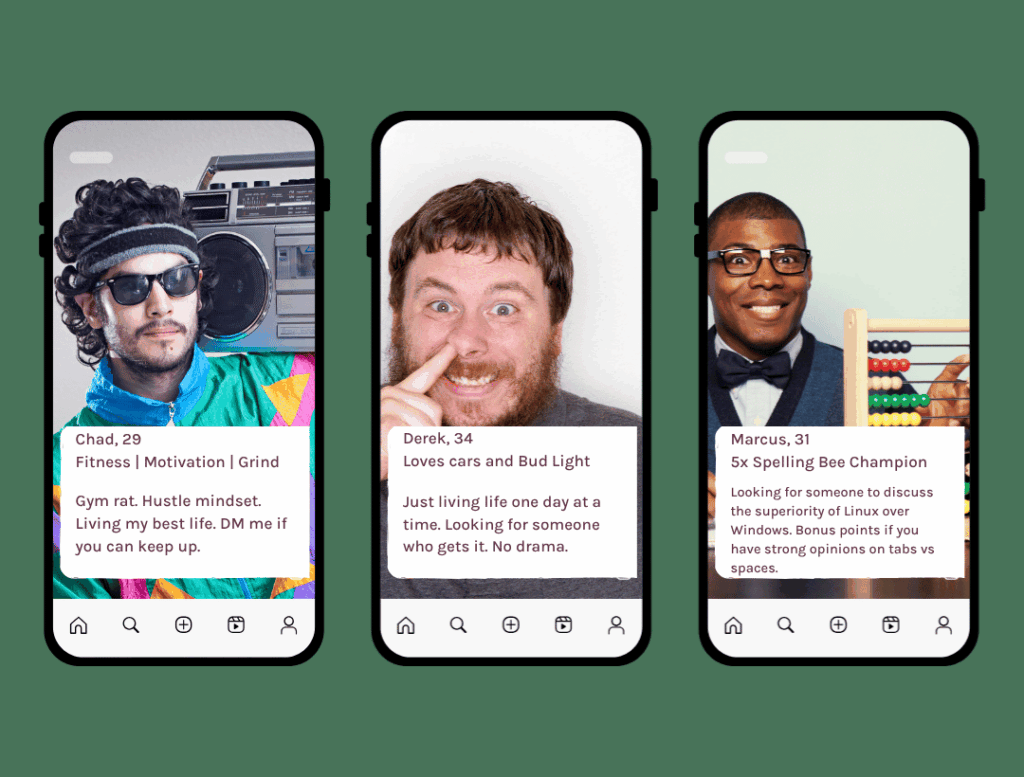
Sounds fine. Also sounds like the four other tabs they have open.
You could swap your name for almost anyone else’s in your space and the page would still make sense. You’re losing pitches to people whose work you know isn’t as strong and competing on price more than you’d like. And in conversations, you spend more time defending what you do and why someone should pick you than talking about whether it’s actually a good fit.
🧭 Misses where they actually are (buyer journey)
Written for one stage of buyer when most of your traffic is at a different one.
This one cuts both ways. Sometimes you’re pushing “work with me” before anyone’s ready, so people land and bounce before they convert. Sometimes you’re still warming up people who came in already decided, and you lose them to a pitch that’s aimed at someone earlier in the journey.
😵💫No clear next step (decision friction)
People aren’t sure what to do next, or whether the next step is for them.
This one is often a copy problem. Vague CTAs that don’t tell anyone what happens when they click. Or your homepage doesn’t orient the reader so they can tell which path is theirs. There’s too many options or no clear pull, so people just leave.
It’s not always copy. Sometimes the wording’s fine and the friction is coming from trust gaps or unclear positioning. But this is the pattern where copy itself is most often the actual constraint.
→ The hard part isn’t spotting the pattern. It’s knowing which one you have and what’s actually driving it.
Because two businesses can have the exact same symptom and need completely different fixes.
The point where your business outgrows its messaging
If it feels like I’m calling you out, I kind of am.
You’ve been spinning in circles on this. You’ve reread the same page so many times you can’t tell if it’s good anymore. You’ve already done some of the work: maybe a course, maybe a messaging doc you spent real money on. Maybe you’ve got a content person, a marketing manager, a cofounder pitching in.
You’ve grown past what you have. Your business has evolved and your messaging needs to catch up. That’s a normal part of this stage btw, not a sign you’ve been doing it wrong.
You also know this is beyond your expertise at this point. It’s time to bring someone in who can help you figure out the right next step—and feel confident it’s the right one.
Here’s the part I’ll say because I lived it: for a long time, I didn’t want to figure out what was actually wrong with my back because I knew the solution was going to be painful and intensive.
Surface-level felt easier.
Until it wasn’t.
Until the cost of not dealing with it got higher than the cost of dealing with it. Until I woke up at Disney and couldn’t get out of bed.
That’s usually how this goes.
The one question that changes how you look at your copy
Here’s the move that changes everything:
Stop asking “is my copy good?”
Start asking “is my copy doing the right job?”
Those aren’t the same question. And the difference between them is the difference between treating the symptom and finding what’s actually broken.
When you ask “is this good,” you want a thumbs up or maybe a few line edits. You’re hiring someone to validate the work.
When you ask “is this doing the right job,” you’re asking something different: who needs to read this, what they need to walk away believing, what decision you want them to be closer to making. And whether the words on the page are doing any of that.
Most messaging that isn’t landing reads fine on the surface. That’s not where the problem is.
You don’t need someone to read your copy. You need someone to read what your copy is doing.
Don’t wait until it’s painful to fix your messaging
That morning at Disney, lying in bed, I finally heard what my husband had been telling me for years. None of it was new information. I’d just been managing it on my terms instead of listening. I stopped trying to confirm what I already thought was wrong and let someone tell me what was actually wrong.
So back to the question I asked at the start.
Why do we wait until it’s so painful we have no choice?
I don’t know. But I do know you don’t have to wait.
If you know something’s off and want to figure out what’s actually wrong before you spend another dollar on the wrong fix, that’s exactly what my audit is for.
Until next time,

Connect with me on LinkedIn
When you’re ready…
1. Looking for the perfect place to use those customer insights? Earn trust with stories that sell. Grab my story-first case study guide.
2. Clarity call: Not sure what’s working? Get clarity on the problem that’s been spinning in your head. (One client called it “therapy for her brand.”)
3. 1:1 positioning, messaging, & copy projects Curious if it’s a good fit? Let’s chat. (Don’t worry. It’s just a conversation. No pressure or hard pitch.)