Why your website investment keeps failing to pay off $19,371.
That’s what it cost to fix a problem we didn’t diagnose correctly the first time.
The cracks showed up in the corner of the living room first, then the doorframes, then along the window sills.
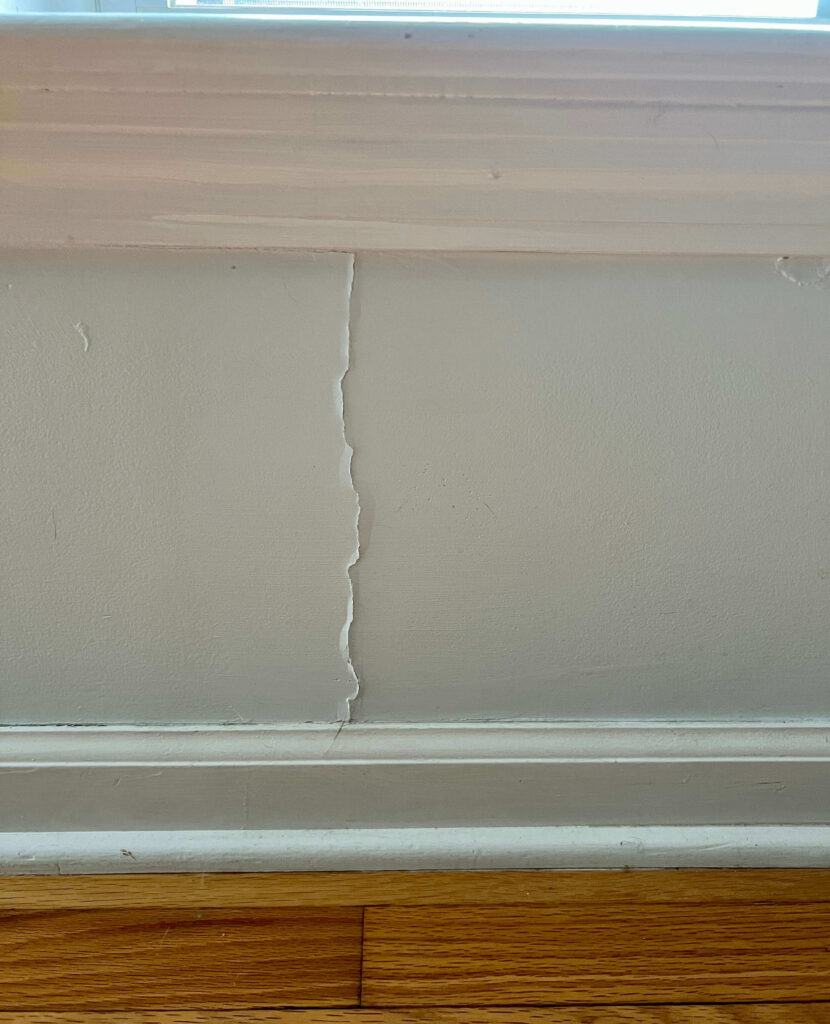
We were already having an addition built onto the back of the house, so we asked the contractor about it. He walked through, took a look, and was confident he knew exactly what to do.
So we let him fix it.
He lifted the house, leveled it out, and patched the walls. Problem solved.
It wasn’t.
What we didn’t know, couldn’t have known, is that we needed a crawl space restoration specialist. What we had wasn’t a crack problem. It was a foundation that was never built to code.
So we paid the contractor. And then we paid the specialist. And then we paid to redo everything the first contractor touched. Twice for the same problem. Because once the real problem was addressed, none of his fixes held anyway.
I’ve seen the same thing happen with websites.
Why hiring the right people still goes wrong
When something isn’t working with a website, the instinct is to fix it.
You take a crack at it yourself first by rewriting a few sections and cleaning up the copy, trying to make it sound more like your brand. Or you hand it off to someone on your team, or you put it into AI and ask for a better version.
And when that doesn’t quite get it there, you bring in help.
- A designer to make it look more credible
- A copywriter to make it sound better
Maybe an agency that promises to do both.
These are the obvious decisions, the responsible ones. When they still didn’t work, it’s a specific kind of frustrating.
The issue isn’t who you hired. It’s when.
Nobody–not you, not your team, not the contractor you brought in–stopped to diagnose what was actually driving the problem before anyone picked up a tool.
Unfortunately, the cracks weren’t the problem.
The real reason your website investment didn’t pay off
Every person you bring in looks at your website through their own lens. They see what they’re trained to fix.
The designer sees a design problem.
The copywriter sees a copy problem.
They probably found real issues that needed attention. But they’re not positioned to see the whole picture, and you’ve already been piecemealing parts of the puzzle.
My first contractor could level a house. He just didn’t diagnose a foundation that wasn’t built to code. I still don’t fully understand how he missed it. 🤷🏻♀️
Maybe it’s because he wasn’t looking for it, and I didn’t know what questions to ask.
That’s how it works with your website too.
You end up with a site that looks better, sounds better, maybe even feels better. The problem is it’s still built on assumptions nobody ever questioned about who you’re talking to, what they need to hear, and why they should choose you.
Better execution on a weak foundation is still a weak foundation.
You can’t see it from the inside
One of the first things I ask clients is simple.
What’s the number one goal of your website? What’s the one action you want people to take?
Most people pause, and that tells me everything. They’ve thought about their website constantly, just never through that lens.
The decisions that followed—the copy they wrote, the designer they hired, the AI prompt they typed at 11pm—were all made without answering that question first. Without a clear goal driving the decisions, everything defaults to assumptions about what should work instead of what actually needs to.
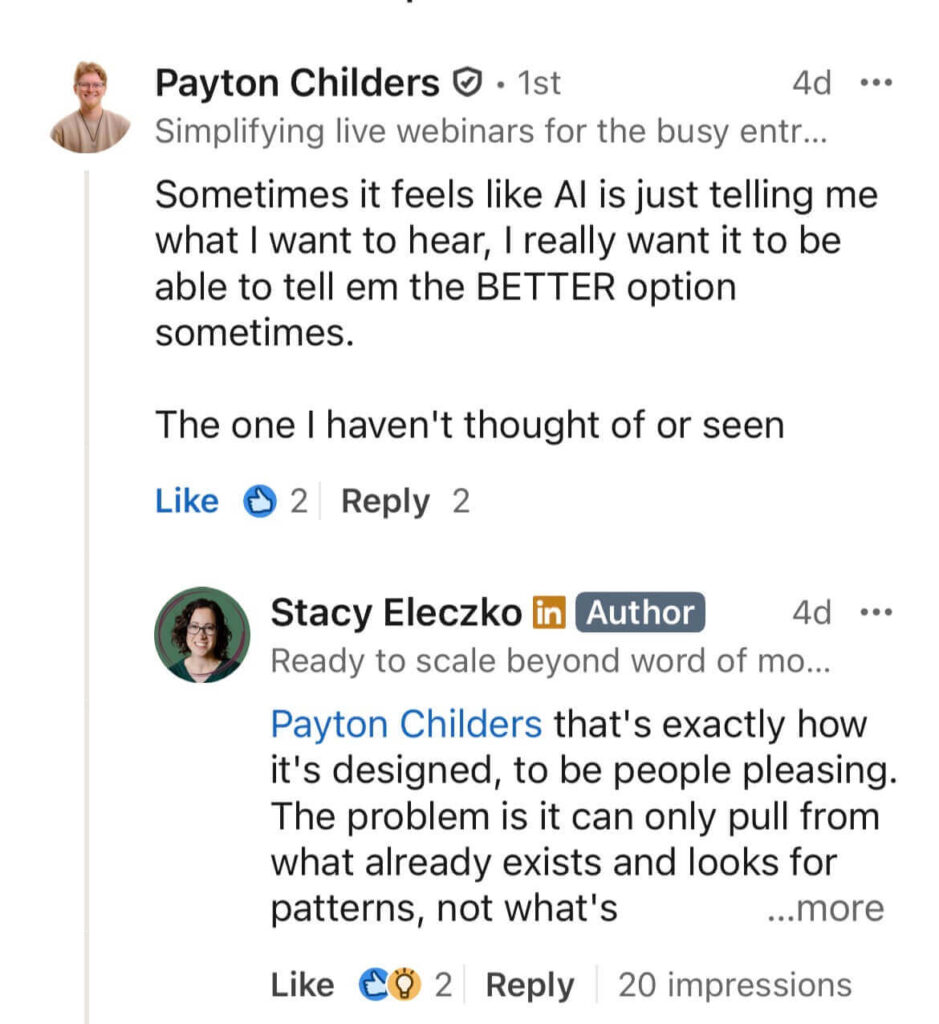
That’s what I mean when I say you can’t see it from the inside.
You don’t know which questions to ask yet. When that happens, everyone you bring in (including AI) just builds on whatever you give them.
The jar doesn’t know what’s written on its own label. Neither does anyone you hand the jar to, unless they know what to look for.
Sound familiar?
You’ve been triaging by what feels most urgent rather than what’s actually broken.
Maybe you’ve even done all the “right” work.
You took the course, built the personas, wrote the messaging doc. You know your business better now than you did two years ago. But without real evidence of what your buyers actually need to hear, you’re still working from assumptions.
And through all of it, the same questions keep surfacing.
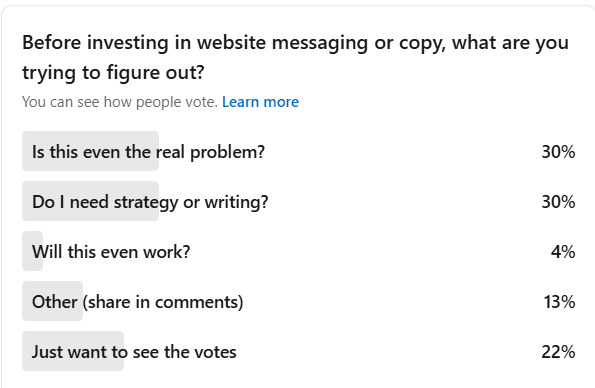
Is this even the real problem? Do I need strategy or writing? Why does it feel like we need to go back to the beginning?
You’ve been doing the work. Investing the time, spending the money, asking the questions. And you’re still not sure any of it is actually solving the right problem.
The foundation problem
Here’s what I see when I look at a website that isn’t converting.
Whatever you think the problem is, it’s probably at least a layer deeper than that.
Your homepage sounds fine but doesn’t make anyone feel like it’s specifically for them. Your entire framework is spelled out on the services page, but the person reading it still can’t tell if you’re the right fit.
The deeper stuff doesn’t show up as a typo or gets fixed with a better headline.
This is what I call the foundation problem. And it’s the reason a new design or better copy doesn’t fix it. AI definitely doesn’t fix it.
All of those things are execution, and execution can’t compensate for a foundation that was never diagnosed correctly.
My first contractor could level a house. Checking whether it was built to code wasn’t even on his radar, although maybe it should have been. (Or maybe I just had a shit contractor. He was the reason I came home to a mismatched house after all.)
💄You can put lipstick on a pig. It’s still a pig.
The cracks came back
We eventually got the foundation fixed. And then we paid to redo everything the first contractor touched: the walls, the repairs, all of it. Because once the real problem was addressed, none of it held.
Paying that bill was painful enough, but even more nagging was the question I couldn’t stop asking.
Could we have avoided this if we’d known what to look for years earlier?
I think about that a lot when I’m working with someone who’s been tweaking the same page for months, reading it so many times they can’t even tell if it’s good anymore. Or talking to someone who’s about to sign a proposal for a project they’re not even sure will solve the actual problem.
Before you spend another dollar
If you’re wondering whether your foundation is the problem, that’s worth finding out.
This is exactly what my website audit process is designed to find. Not more things to fix–the right thing to fix first.
Until next time,

When you’re ready…
1. Looking for the perfect place to use those customer insights? Earn trust with stories that sell. Grab my story-first case study guide.
2. Clarity call: Not sure what’s working? Get clarity on the problem that’s been spinning in your head. (One client called it “therapy for her brand.”)
3. Positioning, messaging, & copy projects Curious if it’s a good fit? Let’s chat. (Don’t worry. It’s just a conversation. No pressure or hard pitch.)