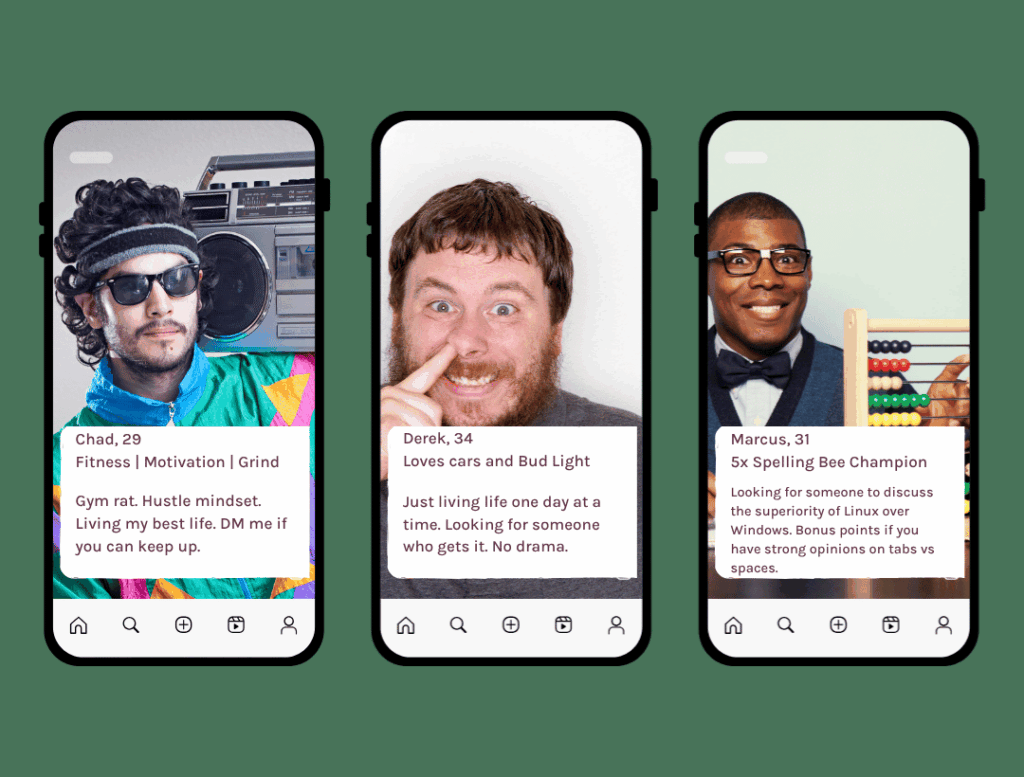
👋🏻 Welcome to issue 93! Did someone send you? Join my other smart subscribers here.
Why fixing your website copy doesn’t always fix your website
When I was teaching second grade, I had a student named Martha. She wrote these elaborate, beautifully developed stories.
The problem was every single sentence was connected with “and.” One long, breathless run-on that never let you in.
The fix was simple: delete the “ands.” Add periods. Suddenly her writing breathed. It became what it always was–just easier to read.
Most people think their website is a Martha problem. It just needs a tweak. (And sometimes that’s true.)
Then there’s Corey.
Corey would have aced a rubric. He also would have bored you to tears.
His writing checked every box. Beginning, middle, end. Good sentence structure, even a decent opening line. On paper, it looked right.
But reading it felt flat. He understood the structure of a story; he just didn’t understand what each piece was supposed to do for the reader.
That’s the kind of problem you can’t find by rereading alone. You have to know what to look for.
Most websites are closer to Corey than Martha. All the right sections: the headline, the benefits, about page, CTAs—and still a site that doesn’t move anyone.
The loop that keeps you rewriting the same page
Most people, when something isn’t working, go back to the copy.
You rewrite the headline, simplify the language, make it more customer-focused. Maybe break things into shorter sections so it’s easier to scan.
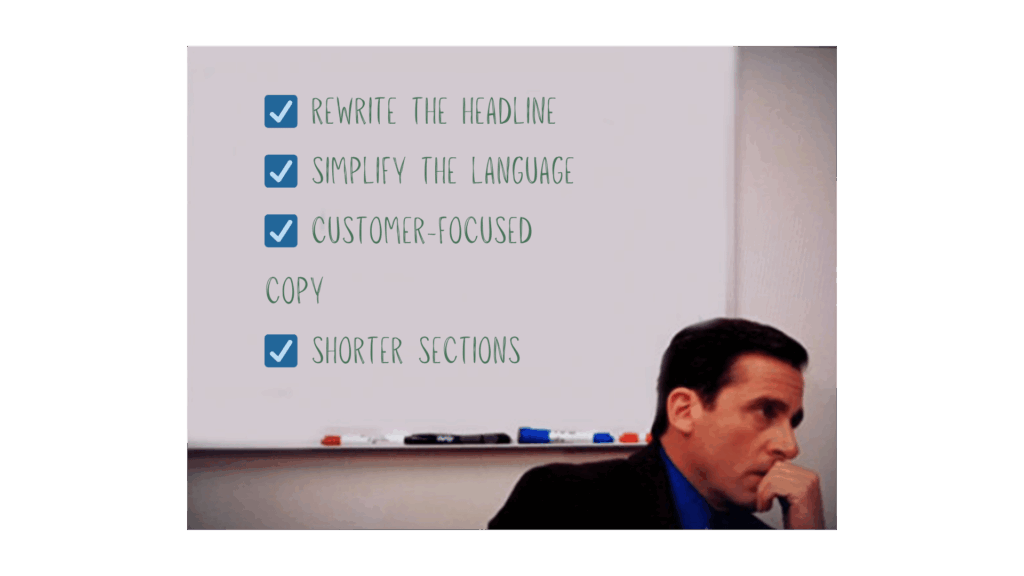
still not converting…
But you still don’t fully trust it.
You read it back, think “this is better”… and open the doc again anyway. You’ve read it so many times you can’t actually tell anymore. So you send it to someone else. Maybe they’ll see what you can’t.
This is the part that throws people off. If it sounds better, it should work better, right?
Except that’s not always what happens.
You end up with something that reads well but still doesn’t convert the way you expected. And now you’re stuck in a weird spot—because you did improve it. It’s just not doing what you thought it would.
This is where people lose time and money, working on something that isn’t the real constraint.
What’s actually going on beneath the surface
Your spouse read it and said it sounds great. Your best friend thinks it’s clear. Someone in your mastermind gave you a thumbs up.
Your ideal client still isn’t booking.
Because the people telling you it sounds great are not your buyers.
Corey’s writing wasn’t unclear or sloppy. It checked every box a good story is supposed to check. What it was missing was harder to name, a sense of purpose behind each choice. A reason for the reader to care.
Your website can have the same problem.
So where does the problem actually live?
Sometimes the issue really is the copy: the specific words, the structure, the way something is phrased.
But often it starts earlier than that.
With what you’re choosing to say, how you’re framing your work, and what you’re assuming your buyer already understands before they land on your page.
That’s your messaging. And when it’s not grounded in how your buyers actually think and decide, no amount of careful rewriting covers it.
Your homepage says you help leaders drive change. So does everyone else’s. That’s not a copy problem either. That’s a positioning problem.
When those aren’t clear, no amount of rewriting fixes it. You’re just layering better sentences over gaps that go deeper than the copy.
Why this is so hard to see from the inside
This is exactly why Corey couldn’t fix his own writing. He didn’t know what to look for.
Your website works the same way.
When you’re inside your own business—inside your own expertise, your own language, your own assumptions about what your buyer already knows—it’s damn near impossible to see what’s actually stopping people from moving forward.
For people who built their business around making a real difference, that’s especially frustrating. The work is good.
You know it.
The people who’ve experienced it know it.
None of that comes through to someone who’s never heard of you. You can feel it. The website’s not speaking to the right people. Or bringing them in.
You’re too close to it.
Not because you’re not smart enough to figure it out. Because proximity does this to everyone.
That’s not a writing problem. That’s not even a messaging problem you can solve by reading more about messaging.
And that’s exactly what makes it so easy to keep working on the wrong thing.
Why your website feels like the problem (but isn’t the only one)
Here’s what I see all the time.
Someone spends weeks on their website. They rewrite it, refine it, get it to a place where it finally feels close. Then they get on a sales call and stumble through explaining what they do. Or they send a proposal and the client comes back with questions you thought you’d already answered.
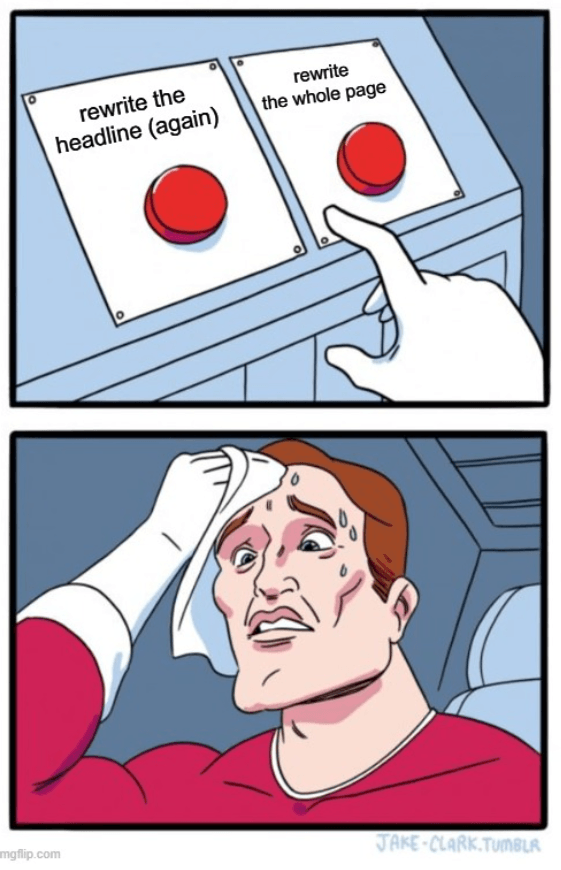
sound familiar?
Or you get on a discovery call with someone who told you they read your website carefully. Ten minutes in, they ask a question you know is answered right there on the page. That’s not a reading problem on their end. It’s a clarity problem that started on your website… and followed them all the way to the call.
The website didn’t create any of that. It just made it impossible to ignore.
Because when your messaging isn’t fully clear, it shows up everywhere you talk about your work, whether that’s you or someone on your team trying to explain what you do to a prospect. It doesn’t stay on the page. It travels.
Your website is just the place where it’s most visible. It’s the place you keep coming back to because it feels like the thing you can fix.
But you can’t fully fix it there. Not without understanding what’s actually driving it.
What it actually takes to fix it
Corey needed someone who could see what he couldn’t. Someone who understood what a story was supposed to do, and could see exactly where his writing didn’t do it.
This is what I’ve uncovered looking at the patterns across the websites I’ve audited: tech startups, consulting groups, course creators, service businesses of all kinds.
The same problems show up everywhere, and they’re not always obvious. That’s because they don’t live in the sentences. They live underneath them.
It usually looks something like this.
Congratulations—your website is grammatically flawless and strategically invisible.
- an about page that tells your story but doesn’t connect it to what your buyer needs to believe
- a services page that explains what you do but not why it matters to the person reading it
- trust signals buried where no one sees them, long after most people have already moved on
When I look at a website I’m not just reading the copy. I’m reading what the copy reveals about the deeper problem, where things are breaking down and why. Because once you can see that clearly, it changes how you approach everything that comes next.
What a focused audit actually gives you
This is what I’ve always looked for. I’ve just finally updated my process to make it clearer: what I’m looking at, what you’ll walk away with, and where to go next.
Most people realize pretty quickly that the problem was more layered than they thought. There were things they didn’t know to look for…
- buyer journey
- how decisions actually get made
- where trust breaks down…
and that’s not a failure. That’s just what’s invisible from the inside.
If you’re curious about one of the 3 beta spots for the new process, reply with “audit” or join the waitlist here. (No commitment. You’re just raising your hand for info.)
Until next time,

Connect with me on LinkedIn
When you’re ready…
1. Looking for the perfect place to use those customer insights? Earn trust with stories that sell. Grab mystory-first case study guide.
2.Clarity call: Not sure what’s working? Get clarity on the problem that’s been spinning in your head. (One client called it “therapy for her brand.”)
3.1:1 positioning, messaging, & copy projects Curious if it’s a good fit? Let’s chat. (Don’t worry. It’s just a conversation. No pressure or hard pitch.)