
“I don’t know what to write about” is not a content problem. It’s usually a positioning and messaging one.
When I say content, I’m talking about your newsletters, articles, LinkedIn posts, what you’re going to talk about when you guest on podcasts, etc.
You often hear me talk about strategy before tactics, and this is a perfect example.
Content feels hard when you’re trying to write before you’ve decided what you stand for in the market.
The shortcuts most people try
When the thought “I don’t know what to write about” crosses your mind, instead of starting with foundations, here are the approaches I usually see.
Instead, most people:
- create content buckets
- build out a content calendar
- go to AI to brainstorm ideas
- stop writing content entirely
- repost other people’s ideas
…but there are a whole bunch of steps they skip first.
(No judgment. I’ve tried most of these too.)
Why this happens to experienced businesses
So what ends up happening is they write about what they want to write about, or what they think people want to hear. Or they come up with a hodgepodge of ideas that aren’t really consistent or coherent and don’t lead people toward their offers.
And to be clear, if you’re reading this, you’re probably not a beginner.
You’ve likely been in business for years. Maybe you’ve grown mostly through word of mouth. You know your work is good.
But your marketing still feels like it should be doing more by now.
So you start tweaking the visible things: the website, the blog content, the LinkedIn posts… but those things are only as strong as the strategy underneath them.
Which is why you often end up rewriting the same pages over and over again.
And yes, I’ve been dealing with this myself lately. Strategy people have to eat their own cooking too.
I’ve felt this myself recently.
I’m very clear on the positioning for my offers. But I’m not going to lie, I’ve struggled with it a little for this newsletter.
And this is exactly the pain I’m talking about.
For me, it’s not that I don’t know what to say. I’ve got tons of ideas. (You should see my Notes app.) It’s figuring out what actually makes sense to write about and when, and having a real plan behind it.
When the positioning and messaging aren’t clear enough, that’s when content starts to feel harder than it should. This is where a lot of people start to get frustrated.
What this looks like inside a team
It feels like it shouldn’t be that hard to just write about what you know and the things you do all the time.
So your team sits down to write something for the website or a campaign and the conversation turns into: “This is good… but it still feels generic.”
Suddenly you’re in a Slack thread trying to agree on what you actually want to say and how to capture why someone should choose you.
That’s usually the signal that the problem isn’t the writing. It’s the positioning and messaging underneath it.
Positioning vs. messaging
Before we go any further, let’s get on the same page about all the jargon.
Positioning is about where you fit in the market and which space you can claim. This is simple to say. Much harder to actually do well.
When I do this work with clients, it’s less about the deliverable and more about the direction.
Your positioning then gets translated into messaging: the key ideas your audience needs to hear. It’s essentially what you’re going to say again and again.
A lot of people try to start here and skip the positioning work. The problem is that’s exactly how you end up sounding like everyone else in your space. This translation layer is still strategic, but it’s where some of the art of this work starts to come in.
Where messaging starts to come to life
This is the point in the process where my clients usually start to get excited. It’s where everything starts to connect.
Once the positioning is clear, and we start translating it into messaging, that’s where they begin to see their vision for their brand come to life.
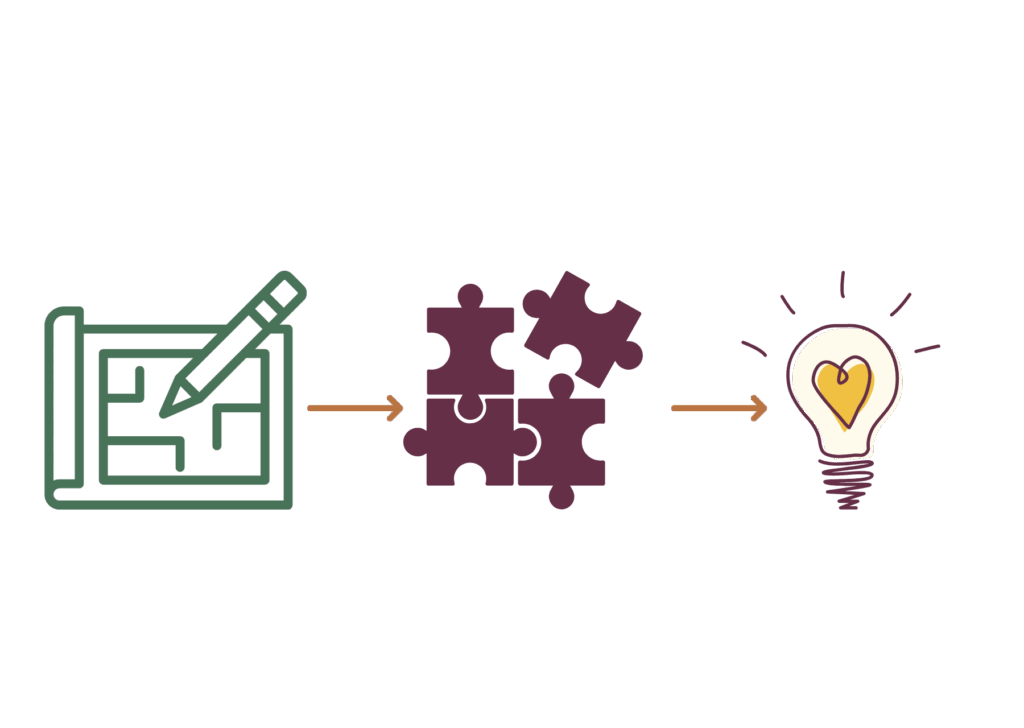
We take everything we uncovered during the positioning work and tie it closely to their ideal client profiles and their buyer’s journey. They can start to see how these ideas will actually show up on their website and across the rest of their marketing.
The messaging work itself is pretty straightforward. At this point, the strategy is already clear. Now we’re translating it into language.
→ First we build out their brand pillars. These are the core ideas that define how the brand shows up in the market and what it consistently stands for.
→ Then we develop the messaging hierarchy, which organizes the key messages their audience needs to hear, from the big strategic ideas down to the supporting points that reinforce them.
→ From there, we map those messages directly to their ideal client profiles and their buyer’s journey, so we’re clear on what their audience needs to hear at different stages.
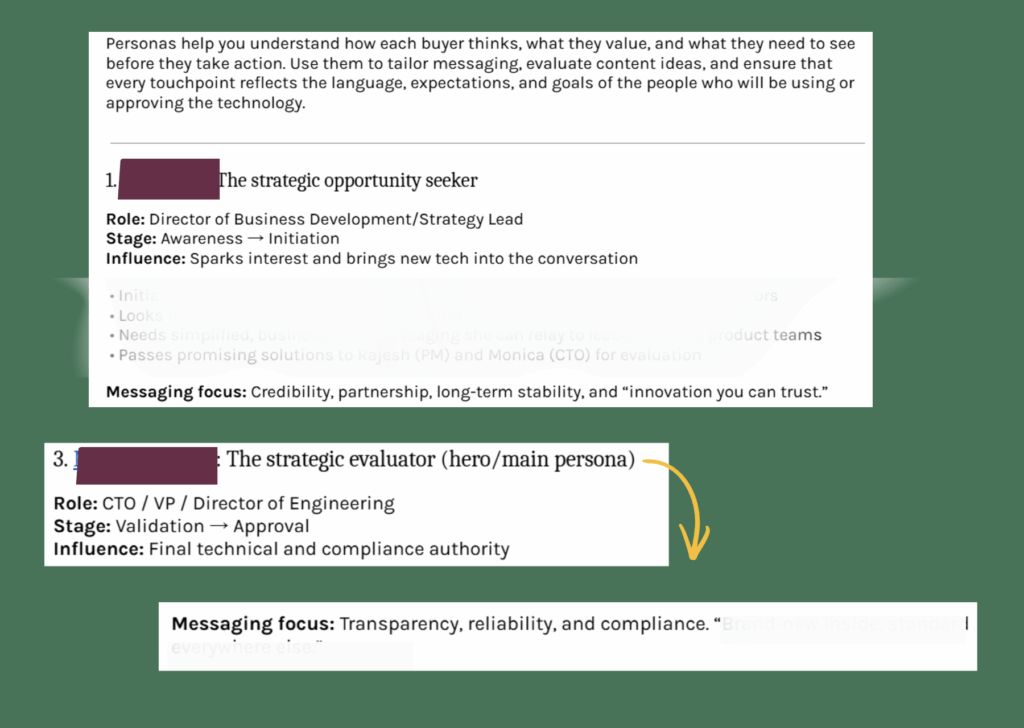
We also create messaging guidelines that build on the positioning work, including their brand voice and tone. And we include examples of how that messaging shows up across their marketing depending on the context.
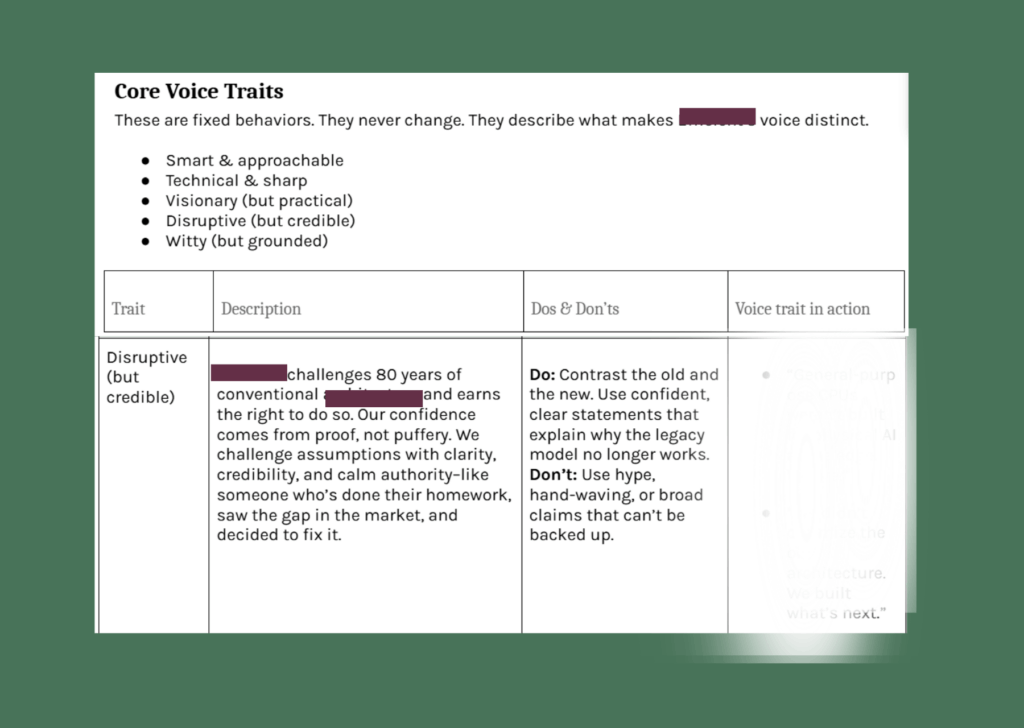
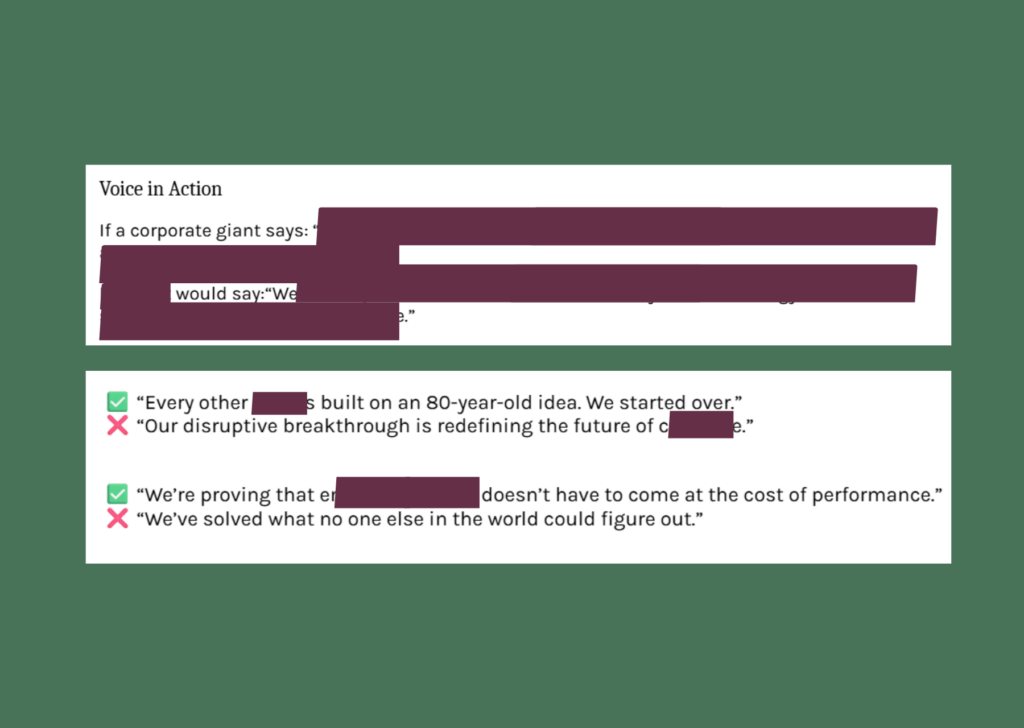
This becomes the foundation for everything they say and publish. Once this layer exists, everything else gets easier.
From strategy to execution
Once we know how they fit in the market and the big ideas they need to communicate, the next step becomes much clearer: how that message actually shows up everywhere else.
In their copy. In their content. (Nope, they’re not the same thing.)
One of my clients’ favorite parts is the messaging one-liners. These are short, punchy ways to communicate their value and perspective, and I often see them implemented immediately.
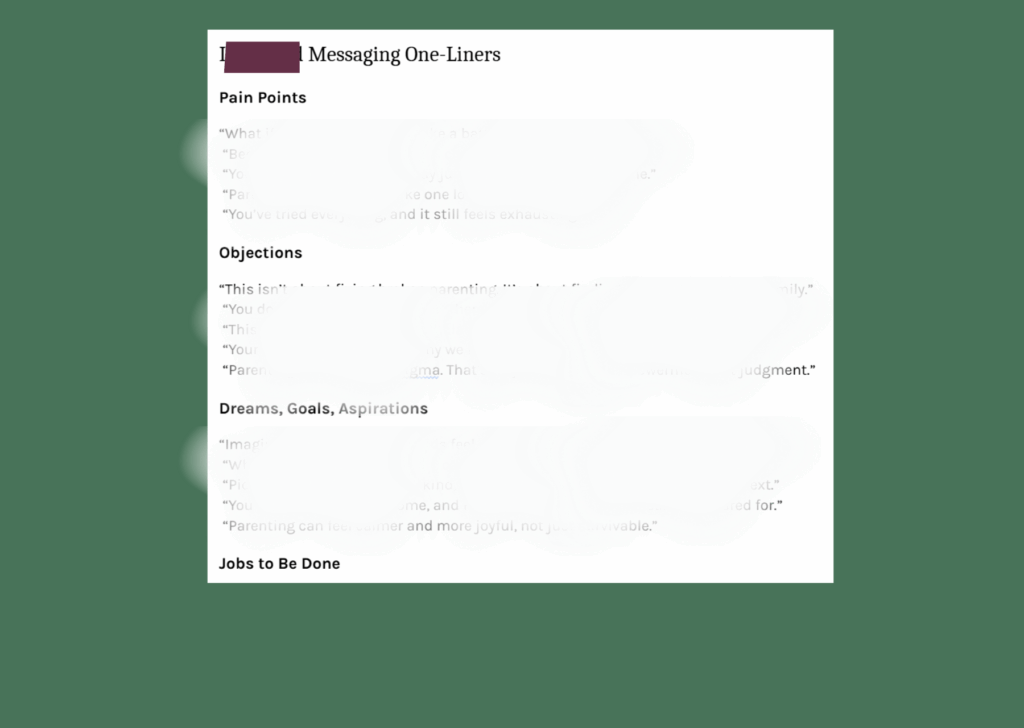
They show up in LinkedIn headlines, blog titles, email subject lines… This is where the messaging starts to translate into real-world communication—adjusted for tone, context, and platform.
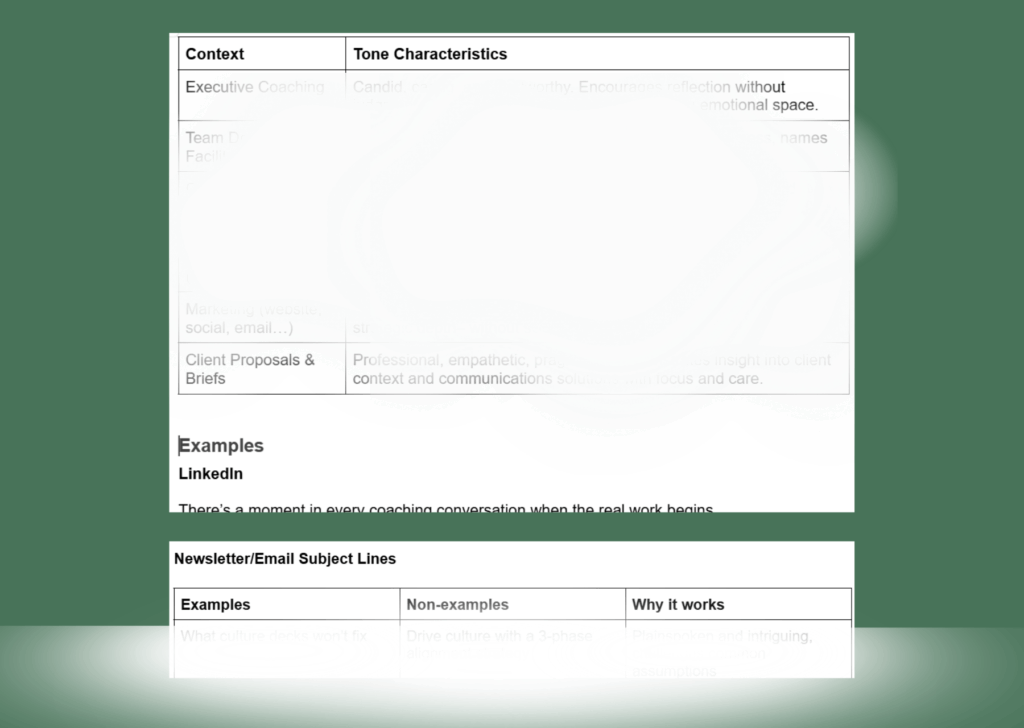
And when I work on their websites and other brand assets like one-pagers, I’ve got evidence-driven messaging as the foundation for strategic copy.
Most people try to start at the content layer and work backwards.
See why it’s so hard if you skipped all the steps before? 💡
The misdiagnosis most teams make
You likely see this same paradox all the time with your own clients.
They come to you convinced the issue is one thing. And from the outside, you can see pretty quickly that it’s actually something else. They can’t see it yet because they’re too close to it.
Unfortunately, the same thing is probably true for you.
Why it’s hard to see inside your own business
This is something that comes up in almost every clarity call I have. (Which is actually why I changed the name from strategy sessions to clarity calls.)
Most of the time, the first step isn’t fixing the thing someone thinks is broken it’s figuring out where the real disconnect actually is.
Sometimes you need a second set of eyes
If you’re reading this and thinking, okay… but now I’m not even sure where the breakdown is, that’s pretty common. It’s exactly why I offer clarity calls.
In one hour, we figure out where the real disconnect actually is.
Because continuing to guess your way through content ideas, messaging tweaks, and website updates usually just means spinning your wheels for another few months.
Sometimes the fastest way forward is just having someone who isn’t inside your business help you see the pattern.
Already know this is the disconnect?
If fixing your positioning and messaging is one of your current priorities, send me a reply or schedule a free call. This is exactly the kind of thing I help teams figure out before they rewrite their website again.
A few things worth checking out
🎤 I was recently featured in Authority Magazine and gave my top 5 tips for your B2B marketing strategy. And you’ll find out the person I’d love to meet IRL.
🆕 Dan Moss just launched The Pipeline Academy, a new community focused on finding more clients through better relationships and smarter systems. It’s currently free to join, so it’s a good time to get in early. See you inside?
Until next time,

Stacy
When you’re ready, here’s how I can help:
1. Copy audit: Get a fresh set of eyes on your website, sales page, or key asset. You’ll walk away with a prioritized roadmap of what to fix first and exactly how to fix it. *This offer is getting a complete overhaul. Book now if you want to grab it at this price.
2. Clarity call: Not sure what’s working, or what’s not? Get clarity on the problem that’s been spinning in your head. (One client called it “therapy for her brand.”)
3. 1:1 positioning, messaging, & copy projects Curious whether it’s a good fit? Let’s chat. (Don’t worry. It’s just a conversation. No pressure or hard pitch.)
*May contain affiliate links.